
Residential electrical service
EV Charger Installation in Van Alstyne & McKinney, TX
Koryente installs home EV charging circuits and equipment across its North Texas service area, offering Tesla Wall Connector installation alongside dedicated Level 2 branch circuits and other listed charging equipment. Every installation starts with a panel and load review, so the circuit is sized correctly for the vehicle and the house rather than guessed at. Homeowners planning a new EV, a second vehicle, or a charger upgrade can request a quote once the vehicle or charger model is known.
Our service includes
What's included in a home EV charger installation
Home EV charger installation
Koryente installs Level 2 chargers and hardwired wall connectors for garages, carports, and exterior parking, sized to the vehicle, the charger's equipment listing, and the circuit the property can support.
Level 2 dedicated circuit installation
A branch circuit sized to the charger's rated amperage runs from the panel to the mounting location, with conductor size and overcurrent protection matched to the equipment and the length of the run.
Tesla Wall Connector installation
Tesla Wall Connectors and other manufacturer-listed Level 2 chargers are wired and mounted according to the equipment's own installation instructions and the applicable electrical code.
Load and panel-capacity review
Before any circuit is installed, Koryente reviews the existing panel's capacity and the loads already on it to determine whether the new circuit fits as-is or needs a panel upgrade or load-management device.
Garage and exterior charger placement
Mounting location and conductor routing are planned around where the vehicle actually parks — an attached garage, a detached shop, or an exterior wall — with weather-rated equipment used outdoors.
Disconnect, breaker, and GFCI protection
Chargers are installed with the disconnecting means, breaker, and ground-fault protection the equipment listing and code require, so the circuit is protected to the same standard as the rest of the system.
Permit and inspection coordination
Koryente pulls the electrical permit for the property's city and coordinates the inspection, so the finished circuit is documented and code-compliant rather than an unpermitted add-on.
Planning guidance
The charger, the circuit, and the panel belong in one plan
A Level 2 charger can be wired for different circuit capacities, and the largest possible circuit is not always the right one. Vehicle capability, daily mileage, the charging window available overnight, the equipment's own installation instructions, panel capacity, conductor routing, mounting location, and weather exposure all shape the finished installation.
Koryente reviews the existing electrical system before deciding whether the project needs a dedicated branch circuit, a hardwired wall connector, a receptacle, a disconnect, load-management equipment, panel work, or a service upgrade. Tesla Wall Connectors and other listed charging equipment are installed to the manufacturer's instructions and the property's actual conditions, not a generic default.
Planning the route and mounting location early keeps disruption to drywall, flooring, and finished space to a minimum, and keeps the equipment practical to use once it's in. Homeowners should have the charger model — or at least the vehicle and charging goals — ready before requesting a quote so the circuit can be sized correctly the first time.
What to expect
How a home EV charger installation works
- 1
Property and load review
Koryente reviews the existing panel, the circuits already on it, and the vehicle or charger you plan to use, to determine the circuit size the installation needs and whether the panel has room for it.
- 2
Circuit and equipment plan
Based on that review, Koryente specifies the branch circuit, disconnect, and charger type — hardwired wall connector or a dedicated receptacle — along with the mounting location and conductor route.
- 3
Permit and utility coordination
Koryente pulls the electrical permit for the property's city and coordinates with the serving utility if the added load requires a service change, before any wiring is installed.
- 4
Installation and protection
The branch circuit, disconnect, and charger are installed with the breaker size, conductor size, and ground-fault protection the equipment and code require, then mounted at the planned location.
- 5
Testing and inspection
Koryente tests the finished circuit and charger, confirms the vehicle charges correctly, and coordinates the required inspection so the installation is documented and complete.
Serving North Texas
EV charging across a growing North Texas service area
Anna's rapid residential growth means many of its homes are newer construction, and panels there are often sized for the house as originally built, not for an EV added a few years later. A load review before installation shows whether the existing panel has room for a Level 2 circuit or whether a panel upgrade should happen at the same time — usually more efficient than adding one later as a separate project. In Melissa, an EV charger request often arrives layered alongside a kitchen update or an outdoor circuit rather than as a single stand-alone project, so the same load review applies before any of those additions goes in.
Sherman's mix of established neighborhoods and newer development means panel age and capacity vary block to block, so the same charger request can mean two different scopes of work depending on the property. Rural and acreage properties elsewhere in the service area more often route power to a detached garage or shop rather than an attached one, which changes the conductor run and can change whether a subpanel makes more sense than extending a single circuit. Incorporated cities in the service area each issue their own electrical permit, which Koryente pulls and coordinates through inspection; in unincorporated areas, permit requirements vary by address, and Koryente confirms what applies before scheduling the work.
Common questions
EV Charger Installation questions, answered
What determines the cost of an EV charger installation?
The main cost drivers are whether the existing panel has room for the added circuit or needs an upgrade, how far the charger location is from the panel, whether the charger mounts indoors or outdoors, and which charger you choose — a basic receptacle costs less to install than a hardwired Wall Connector. Koryente provides a firm quote after reviewing the panel and the planned charger location.
Can I just plug my EV into a regular outlet instead of installing a charger?
A standard 120-volt outlet will charge most EVs on Level 1, but it adds only a few miles of range per hour, which rarely keeps up with daily driving. A dedicated 240-volt Level 2 circuit charges several times faster and is what most homeowners install for regular overnight charging.
Does a home EV charger need GFCI protection?
Most Level 2 chargers need ground-fault protection, either built into the equipment or provided by the circuit, per the manufacturer's installation instructions and the National Electrical Code. Koryente installs the disconnect, breaker, and any required ground-fault protection to match what the specific charger's listing calls for.
How long does it take to charge a car with a Level 2 home charger?
Charging time depends on the vehicle's battery size, how depleted it is, and the vehicle's own onboard charger, not just the circuit's amperage. Most EVs on a properly sized Level 2 circuit recharge fully overnight, which is why Level 2 is the standard recommendation for daily home charging.
Do I need a permit for a home EV charger installation?
Yes, in every incorporated city Koryente serves — a new dedicated circuit, including an EV charger circuit, requires an electrical permit and inspection. Koryente pulls the permit for the property's city and coordinates the inspection as part of the installation. For homes in unincorporated areas, permit requirements vary by address, and Koryente confirms what applies before the work begins.
Will installing an EV charger require a panel upgrade?
Sometimes, depending on the panel's existing capacity, the loads already on it, and the charger's circuit rating. A load calculation during the initial review shows whether the panel has room for the new circuit as-is, needs a load-management device, or needs to be upgraded before the charger goes in.
Sources and standards
- Learn More About NFPA 70, National Electrical Code (NEC)(National Fire Protection Association (NFPA))
- Charging Electric Vehicles at Home(U.S. Department of Energy, Alternative Fuels Data Center)
- Electric Vehicle Chargers(ENERGY STAR (U.S. EPA/DOE))
- Getting Started with Home EV Charging(U.S. Environmental Protection Agency (EPA))
EV charger installations
Highlights from our EV charger work
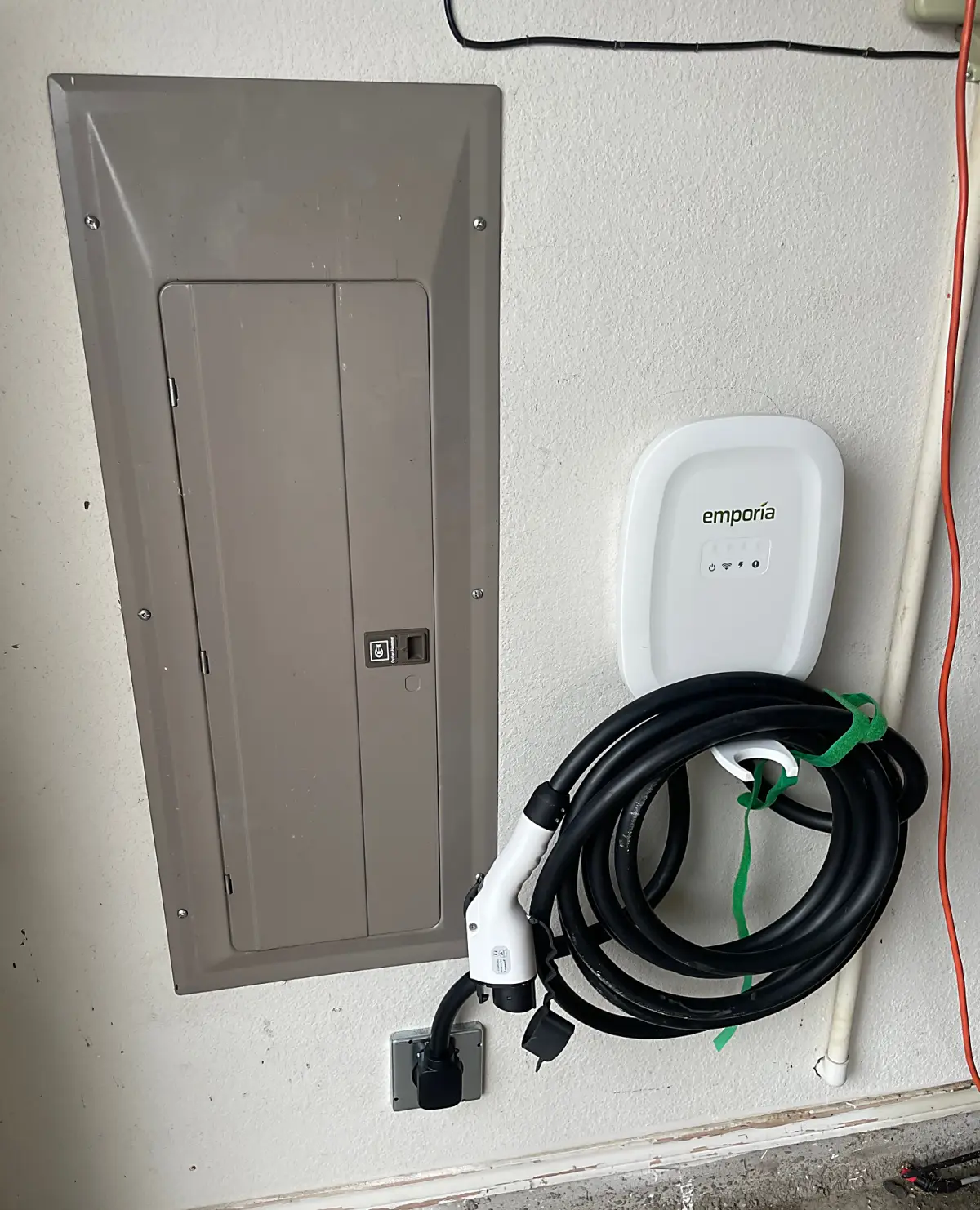
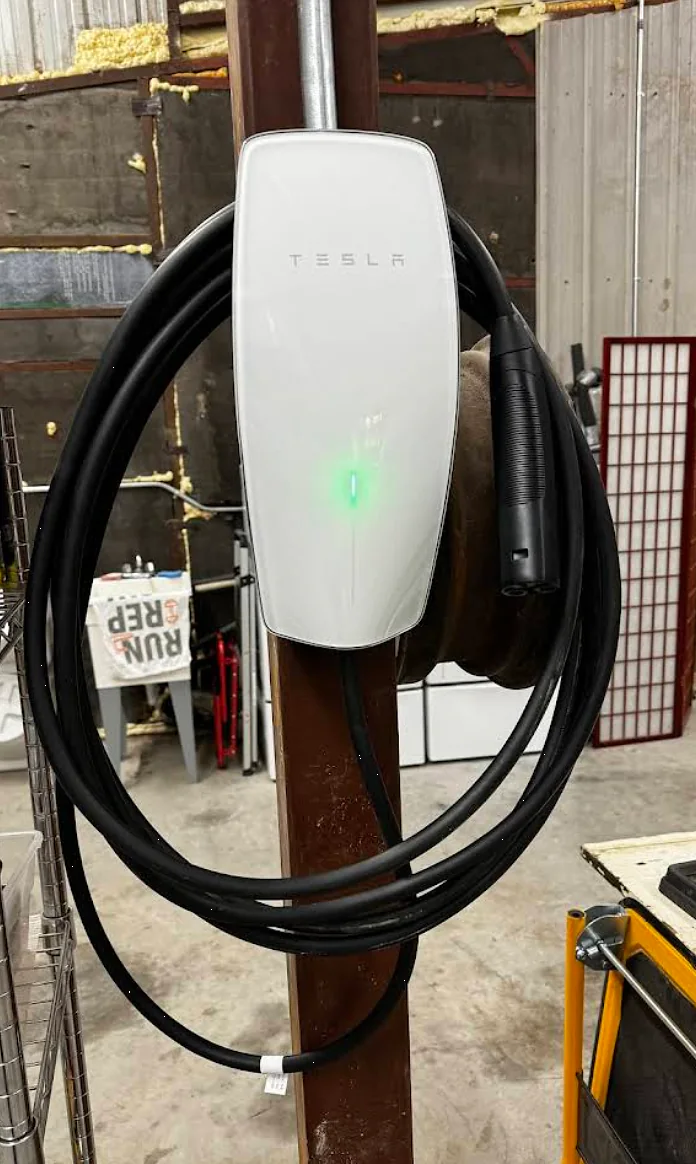
A sample of the Level 2 home chargers and wall connectors we have installed on dedicated circuits.
EV Charger Installation reviews
What customers say about this work
Related residential services
Keep planning from the same place
Electrical Repair
Safe, practical repairs for the electrical problems disrupting your home.
Electrical Troubleshooting
Systematic diagnosis for intermittent, hidden, or recurring electrical issues.
Electrical Panel Upgrades
Modernize an undersized, obsolete, or crowded electrical panel.
Subpanel Installation
Add organized circuit capacity for additions, workshops, garages, or equipment.
Ready when you are
Tell us what your electrical project needs
Start with a few details. Our team will route your request to the right residential, commercial, government, or industrial intake.